Nuclear Means Stable
The year 2022 has once again demonstrated the significance of nuclear for the global energy mix. And while the focus was initially on the non-carbon nature of nuclear energy, over…


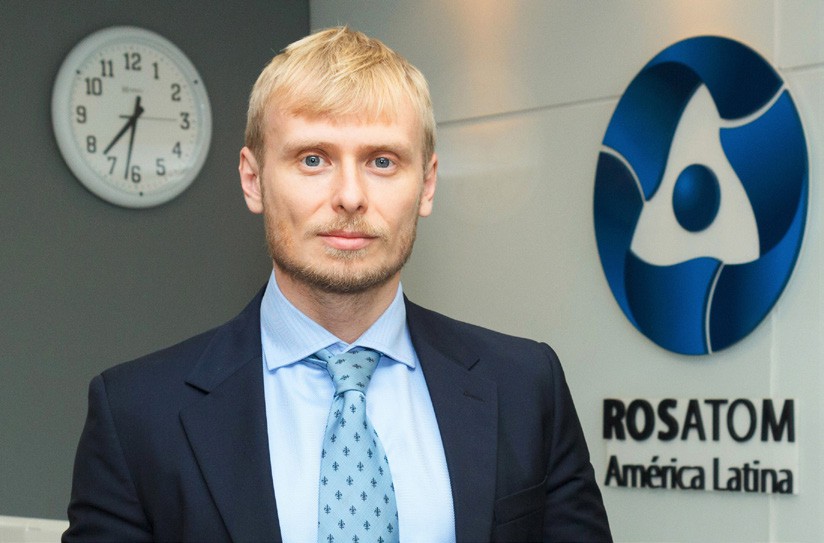
What are the trends in the energy sector of Latin American countries? Why do regional countries need to develop nuclear energy? What does Rosatom offer its partners in the region? Ivan Dybov, Director of Rosatom America Latina, answers these questions.
– Could you please briefly outline the situation in the Latin American energy sector?
The countries of Latin America are very different in terms of maturity of their energy infrastructure, generating capacity and transmission capabilities. Although different, there is a number of common challenges all of them face.
One of the challenges is dependence on a single type of energy. Many countries rely on hydropower as their main source of electricity. For example, hydro plants account for over 70% of the total electricity generated in Brazil. For this reason, Brazil, Costa Rica and Guatemala suffer from power shortage from time to time, particularly in dry weather periods when the power output declines and the price of electricity goes up.
What is more, some countries like Chile, for example, have to purchase large amounts of electricity from abroad.
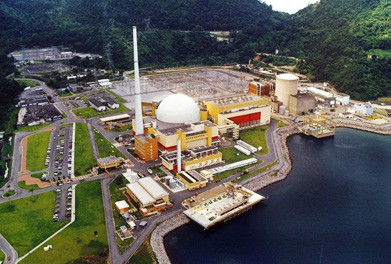 It is interesting to note that those Latin American countries that already have nuclear generating capacities – Argentina, Brazil and Mexico – plan to build more nuclear power plants. In particular, Brazil wants to complete the construction of Unit 3 at the Central Nuclear Almirante Álvaro Alberto complex (Angra III) and has voiced intentions to increase its nuclear generating capacity to 10 GW. Mexico has recently re-included plans to build 1.5 GW of nuclear capacity into its national energy development program. In its turn, Argentina is looking for partners to build new nuclear plants. With that in mind, we can make a conclusion that the countries that have embarked on nuclear energy programs see nuclear as a reliable, cost-efficient and sustainable source of energy.
– What are the trends in the energy sector and what goals do national governments in the region set for themselves?
The overarching goal of every country in the energy industry is to secure uninterrupted supply of inexpensive electricity in the amount sufficient to meet the growing needs of industry and improve the quality of life of people while preserving the environment. Each country achieves this goal in its own way: some choose nuclear, others rely on alternative energy sources, such as wind and solar. This trend is particularly strong in Argentina, Chile, Brazil and other countries that have necessary environmental conditions.
At the same time, the region shows interest in the development of nuclear energy. Chile, for example, has studied the prospects of using small power reactors in high seismic zones typical of that country.
In Mexico, the National Institute for Nuclear Research (ININ) studies the possibility of using small and medium power reactors to supply remote and hard-to-access regions of the country with electricity.
In addition, Brazil is interested in small modular reactors (SMR). Two years ago we were invited by the Brazilian Ministry of Mines and Energy to hold a seminar on the Russian SMR technology and explain technical and economic advantages of small modular reactors.
– Why can active development of nuclear energy be the best solution for the region?
In my opinion, the best solution for a reliable and efficient energy infrastructure is an optimal mix of different energy sources. Nuclear generation has its undeniable strengths as a source of baseload power. With baseload on their national grids, countries receive an opportunity to develop less reliable alternative energy sources, such as solar or wind.
– Some countries in the region have been using nuclear power for many years by now. Could you please tell us about the history, current status and other specifics of the Embalse and Atucha nuclear power stations in Argentina, Angra in Brazil and Laguna Verde in Mexico.
At present, only three Latin American countries have nuclear power plants. These countries are Argentina, Brazil and Mexico. However, the share of nuclear in their national energy mixes is extremely low and makes 2% of the total electricity production in Mexico, about 3% in Brazil and around 4% in Argentina.
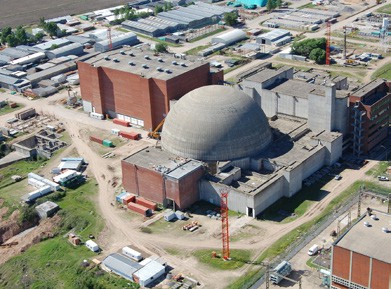
Argentina operates three nuclear power reactors running on natural uranium – Atucha I, Atucha II and Embalse. The country also develops its own small modular reactor CAREM 25.
Brazil has two operating reactors, Angra I and Angra II, located at the Central Nuclear Almirante Álvaro Alberto complex (Angra Nuclear Power Plant). At present, the country takes steps to continue with its project and complete construction of the plant’s third unit. The construction started as early as the 1980s but was suspended several times for different reasons and has not been finished by now. The Brazilian Government plans to carry out due diligence of the unfinished facility to assess its condition and the cost of completion and has sent out a request for proposals. Due diligence results will be provided to potential vendors (large international companies) that will bid for the contract to complete Angara III. An EPC contract is believed to be the preferred option.
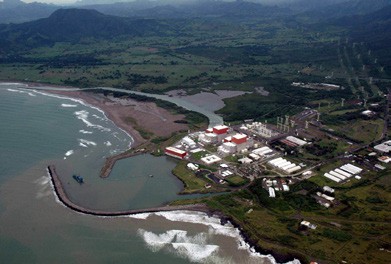
Mexico has the only nuclear power station in operation, Laguna Verde, that was brought online in the 1990s. Initially, the Government of Mexico had plans to increase its capacity but then abandoned them for several years. Earlier this year, nuclear generation was re-included into the national energy infrastructure development plan. I would like to mention that Rosatom has supplied 100% of enriched uranium to Laguna Verde for several years by now.
– What effect can the nuclear sector produce on the national economies in the region? What additional advantages does a country gain if it develops nuclear power?
Development of power and non-power applications of nuclear technology can give an impetus to economic development of the region and improve the quality of life for locals. It should be noted that nuclear is one of the most cost-efficient sources of electricity. It is enough to say that one dollar invested in the construction of a nuclear power plant returns 4.3 dollars to the country’s GDP.
For now, Latin American countries are more active in non-power applications of nuclear technology, and Rosatom is ready to share its expertise in this field. For instance, the Russian nuclear corporation is building a nuclear science and technology center in Bolivia to help develop nuclear medicine and science in the country and enable the use of nuclear technology in local agriculture. We have also signed a memorandum of cooperation with the Dominican Republic. The document lays a foundation for partnerships in the non-energy sector.
Nuclear medicine also has much potential in the region. As an example, Rosatom is a major supplier of medical isotopes to Brazil. We develop cooperation with Argentina and plan to expand our partnership with Mexico.
Not long ago we had meaningful talks with Guatemala and Costa Rica. Those countries plan to begin working on a legal framework for the application of nuclear technology in health care and agriculture.
I would like to point out that non-energy applications of nuclear technology have a positive effect on the local economy and quality of life of the people living there. For example, irradiation of agricultural produce increases its shelf life, so local companies can export more products and, consequently, will generate more profit and pay more taxes to the government.
Apart from that, a developed nuclear industry creates many new jobs and increases the level of education among the locals.
– What other nuclear technologies, apart from nuclear power generation, are or can be adopted by Latin American countries?
As I have already said, we see potential in nuclear medicine and agriculture, particularly in irradiation applications for the treatment of agricultural produce. Rosatom has gained much expertise in the Latin American market. For example, we have supplied irradiation facilities to Cuba, Ecuador and Peru, where they have been working till now, with upgrades on the plan.
We also hold talks with private investors to establish joint ventures that will construct nuclear facilities for irradiation of produce and sterilization of medical equipment in Brazil and Mexico.
– What does Rosatom offer its partners in the region? Could you please tell us about local projects carried out or planned to be carried out in the near future?
One of Rosatom’s key projects in Latin America is a nuclear research and technology center in El Alto (Bolivia). It will be the world’s highest nuclear facility sitting 4,000 meters above the sea level. The nuclear technology center will bring local health care to a new level and make a sizable contribution to the city infrastructure. It will also create around 500 highly qualified jobs for the residents of El Alto and La Paz. If its capacity is expanded in the future, the center will help provide local people with healthy food and secure food supply in the region. The center will serve as a reference for other similar projects in the region – neighboring countries already show interest in them.
We also plan to expand our cooperation with Brazil in the supply of isotope products. We will soon sign a supply contract for new isotopes, such lutetium and actinium. We bid for uranium supply contracts on a regular basis and, for four years now, have been supplying natural uranium for the production of nuclear fuel in Brazil.
We also see much potential in the cooperation with Argentina in nuclear fuel cycle management.
We work with many Latin American countries, while making the first steps in establishing ties with some of them. If they get interested, we sign memorandums to outline specific areas of cooperation. Later on, we form working groups to draft international agreements that serve as a legal basis for larger projects in nuclear energy and other applications of nuclear technology.
– What are the functions of Rosatom America Latina? Could you tell us about your current projects, plans and goals?
Our primary goal is to search for new business opportunities, support current projects and secure revenue growth and new contracts in Latin America for the Russian nuclear corporation Rosatom. We should be closer to our customers, feel their needs and help them solve non-routine tasks.
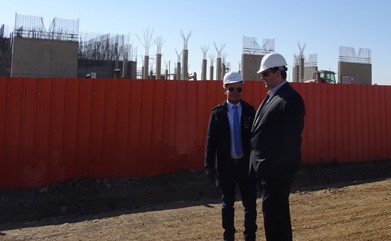
With this in mind, we hold regular business meetings, do market research, prepare offers and proposals, including proposals for mergers and acquisitions of other businesses. We also collect feedback on Rosatom’s products and services and analyze what their best ways to market are, how competitive they are and how they can be made more attractive for the market.
It is but natural that, doing business in Latin America, we invest much effort and money in corporate social responsibility. For instance, we launched a number of social initiatives in Brazil.
Since early 2021, we have cooperated with Brazilian environmental organization Instituto Vida Livre that releases animal victims of poaching, accidents and other human activities in natural habitats back into the wild.
In 2020, amidst the pandemic, Rosatom America Latina provided support to the neighborhood association of Cidade de Deus, one of the poorest neighborhoods in Rio de Janeiro, and Os Arteiros, a local art group. We organized a joint charity event – more than 300 families in need received food boxes, face masks and antiseptics to counter the spread of coronavirus. In October, we supported the Amores, a stage performance produced and played by children from poor families.
What matters most to Rosatom is training of industry professionals who will later contribute to the development of nuclear technology. For this reason, we support Russian universities offering degrees in nuclear science and engineering in their contacts with Latin American universities and acquiring students from Latin America to study in Russia. In particular, the National Research Nuclear University (MEPhI), a key supplier of staff for Rosatom, and Brazil’s Nuclear and Energy Research Institute (IPEN) signed a memorandum of understanding in 2020 to cooperate in research and education.